

Free one-page guide · Secure
The 10 Cyber Commandments
Ten habits that shut down the most common ways people get robbed online, on one printable page.
- Format
- Length
- 1 page (US Letter)
- Size
- 79 KB
- Version
- Version 2.0
Who it's for
Written for
Individuals, not IT teams: employees, family members and anyone who uses email and online banking. Plain language, one page, easy to print and share.
What's inside
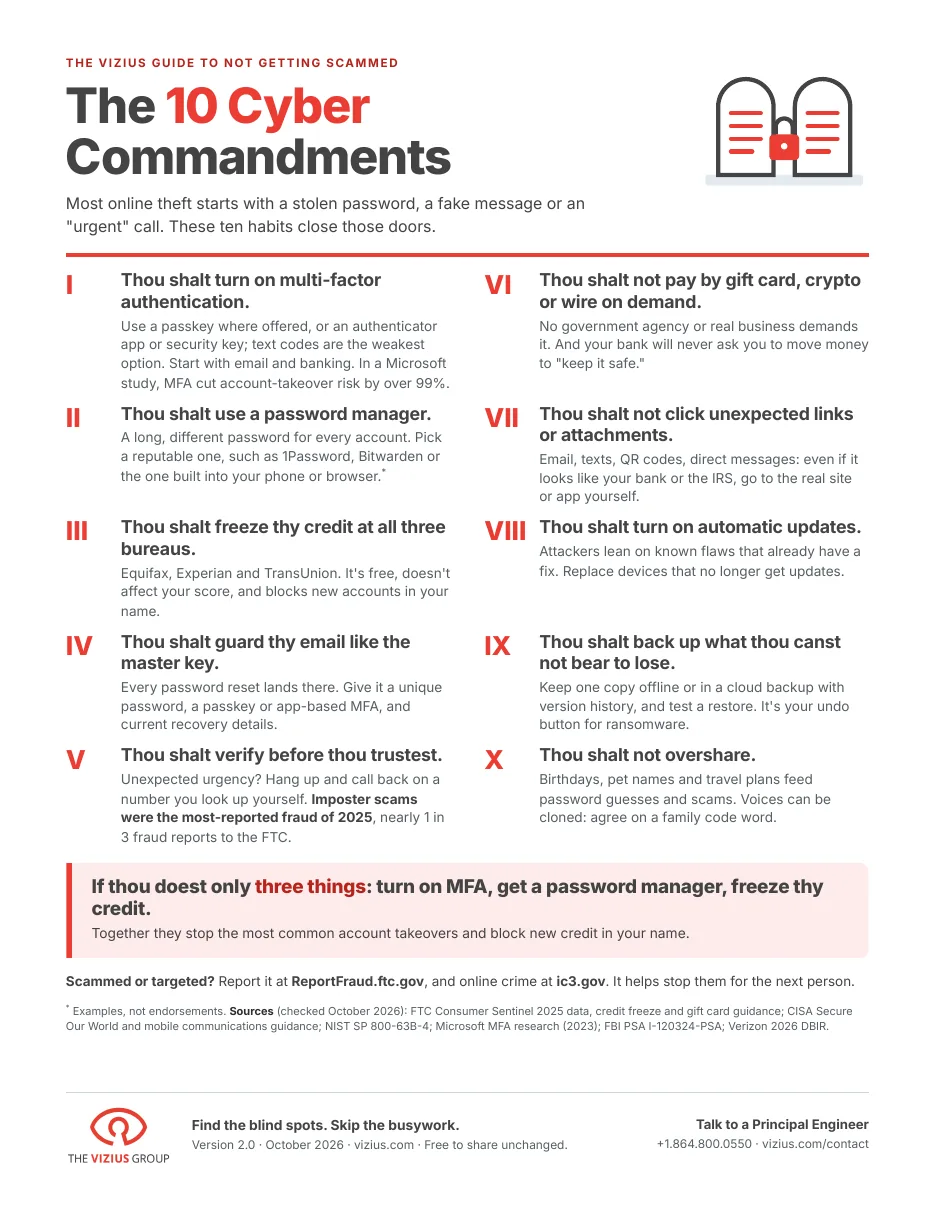
- I to V. Turn on multi-factor authentication, passkeys first. Use a password manager. Freeze your credit at all three bureaus. Guard your email like the master key. Verify before you trust.
- VI to X. Never pay by gift card, crypto or wire on demand. Don't click unexpected links, texts or QR codes. Turn on automatic updates. Back up what you can't bear to lose. Don't overshare, and agree on a family code word.
- If you do only three things. Turn on MFA, get a password manager and freeze your credit.
- When a scam reaches you anyway. Report it at ReportFraud.ftc.gov, and online crime at ic3.gov. Sources are listed on the page.
Key takeaways
- Use a passkey where offered, or an authenticator app or security key. Text-message codes are the weakest option. Start with email and banking.
- Imposter scams were the most-reported fraud of 2025, nearly 1 in 3 fraud reports to the FTC. Hang up and call back on a number you look up yourself.
- No government agency or real business demands payment by gift card, crypto or wire, and your bank will never ask you to move money to "keep it safe."
- A credit freeze is free, doesn't affect your score, and blocks new accounts in your name.
- Voices can be cloned. Agree on a family code word for emergencies.
Summarised from version 2.0 of the document. Use the download button at the top of the page for the full detail and sources.
Related offering
Secure
Managed Email Security & Phishing Simulation
“Will our people spot the scam before it costs us?”
More free downloads:
Talk to a Principal Engineer about this
Want these habits to stick across your company? A Principal Engineer can talk through phishing and account-takeover risk with you. Thirty minutes, no slide deck.